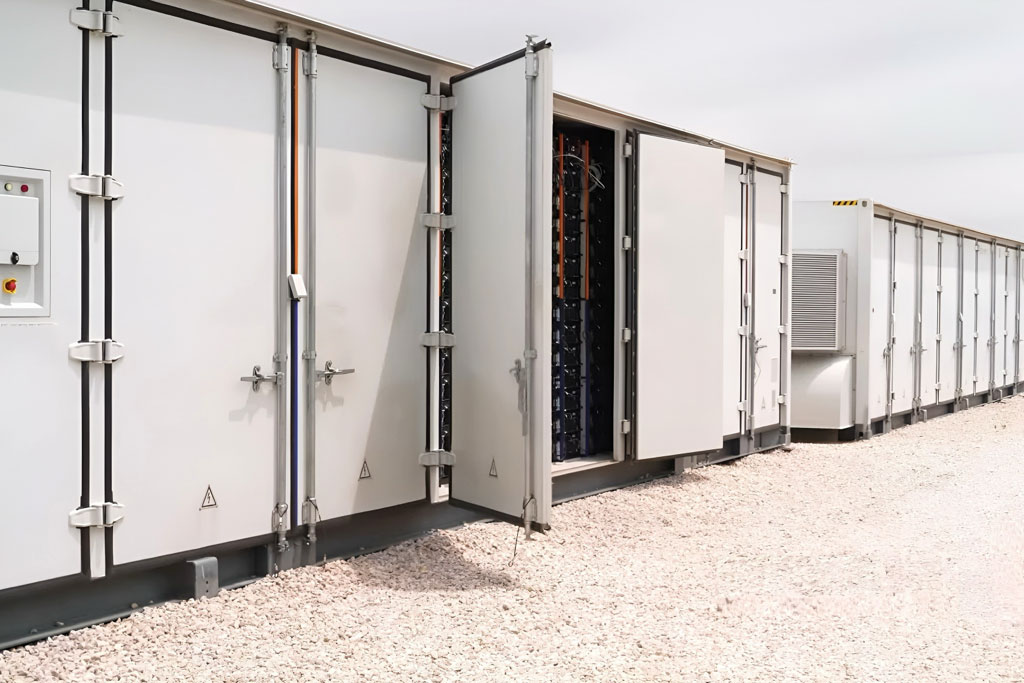
At first glance, they appear to be similar models: both are associated with electrical assets, both participate in energy markets, and both aim to maximize revenue in a volatile environment. But in reality, we are talking about completely different assets.
A wind or solar plant has a more or less fixed profile, conditioned by weather patterns. A battery has thousands of possible profiles every day, because its value lies not in producing energy, but in choosing when to charge, when to discharge, and in which market to do so.
All this means that the valuation of energy projects with storage, whether standalone or hybridized with renewables, requires a completely different methodology.
Therefore, evaluating BESS or flexible projects is not the same as evaluating a traditional renewable energy project.
While traditional renewable assets depend on one or two main markets, revenue from a battery comes from a simultaneous and strategic combination of multiple markets. This is one of the structural differences that prevents the use of classic valuation models.
Batteries can generate revenue by arbitraging in the day-ahead market, repositioning themselves intraday, participating in balancing services such as secondary (aFRR) or tertiary (mFRR) frequency response services or Replacement Reserve (RR), offering support in congested nodes, or even through capacity mechanisms that provide financial stability. Added to this are an increasing number of bilateral agreements and specific contracts for BESS, which are still emerging but growing.
Faced with this reality, the difference with renewables is enormous. A photovoltaic project sells what it produces, when it produces it, and at the price set by the market. A battery, on the other hand, chooses where, when, and how to make money, and that decision changes every hour of the year depending on prices, spreads, system ramps, congestion signals, or liquidity in services.
Operational flexibility is at the core of the business model.
This logic makes revenue stacking from a BESS something that is alive, dynamic, and highly dependent on the actual behavior of the electrical system. And assessing it requires understanding that complexity.
Storage is not a "virtual" asset that can be assumed to be ideal in Excel. Its physical behavior directly affects its ability to generate income. Therefore, attention must be paid to a series of technical elements that any serious model must incorporate:
The model assumed for the battery in Excel bears no resemblance to a battery connected to a real market, with strict rules and penalties for non-compliance.
This set of physical and operational constraints is what makes BESS assessment a discipline in its own right. Without them, any calculation is incomplete or produces misleading results.
If using average price curves was already insufficient for renewables, it is completely unfeasible for projects with storage. As we have seen, the value of a battery lies in spreads, intraday volatility, steep system ramps, and extreme days when a BESS captures much of its annual profitability. Hence the need to use battery-ready price prediction curves capable of reproducing extreme events and real market behavior.
Another important point is to understand that a battery does not always operate in the same way. It can adopt aggressive strategies, maximizing revenue at the expense of faster degradation, balanced strategies that attempt to optimize the relationship between profit and useful life, or conservative strategies that seek stability and low wear and tear. Each of these leads to very different financial results, both in terms of revenue and IRR.
That is why there is no single "correct" number when valuing a BESS. The result is a strategic range of possible outcomes. Proper valuation of battery energy storage projects must capture this variety of scenarios and behaviors in order to provide a realistic perspective on the project.

One of the biggest challenges in storage valuation is understanding that a battery can participate, sometimes simultaneously, in several markets.
When is it best to arbitrate, and when should capacity be reserved for a balancing service? When should operations be suspended to avoid unnecessary degradation? What happens if the asset operator does not execute the optimal strategy? What happens if the year is meteorologically abnormal or if regulatory reform changes the rules of the game?
These questions do not belong to the traditional financial world; they belong to the operational world. And therein lies the fundamental difference between evaluating renewable energy projects and evaluating energy storage projects.
Including uncertainty in the modeling system allows you to define alternative futures, modify grid conditions, liquidity, and renewable penetration, compare configurations, assess revenue sensitivity, and analyze the resulting cash flows.
This brings us closer to answering questions that were impossible to address just a few years ago: What is the optimal battery size? What duration is truly profitable? How does revenue stacking change as renewable energy penetration increases?
That is why we say that valuation models that are suitable for reflecting the actual behavior of a system incorporating batteries in a more accurate way take uncertainty into account as a central part of the valuation process.
The energy transition has introduced new dynamics and new risks, but also new opportunities for those who know how to interpret them. A model that captures this complexity not only improves financial accuracy: it enables truly informed investment decisions in a sector that is evolving faster than ever before.
In this context, there is a need for models and tools capable of representing this complexity without oversimplifying it. An approach is needed that can integrate volatility, strategies, simultaneous markets, and technical constraints in a coherent manner.
Tools such as One Hub Analytics were created precisely to fill this gap: they allow you to simulate the actual behavior of a BESS or hybrid project in different futures, evaluate its participation in all relevant markets, and understand how operational decisions impact revenue, degradation, and financial KPIs.
If you would like to learn more about this, we invite you to explore theOne Hub Analyticspage or request a demo.